FINDING OUR (ONLINE) FEET

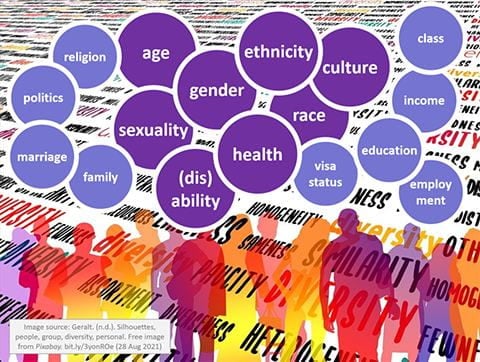
Slide from Pegrum, M. (2021). Going global, going local, going mobile, keynote, GloCALL, 16-18 Dec 2021, showing aspects of superdiversity

Slide from Pegrum, M. (2021). Going global, going local, going mobile, keynote, GloCALL, 16-18 Dec 2021; image source: Geralt. (n.d.). Silhouettes, people, group, diversity, personal. Free image from Pixabay. bit.ly/3yonROe

2021 Wrap-up
Perth, Australia
17 January 2022

As we all know by now, 2021 turned out to be yet another year of global challenges and widespread suffering due to the evolving situation with COVID-19. Nevertheless, we were able to build on a number of the lessons learned in 2020, engaging in some creative forms of online, hybrid and hyflex teaching, as well as learning from colleagues at well-organised, primarily online conferences and other professional development events. Clearly, problems of access and accessibility remain around much of the world, often tied to a lack of hardware, software and/or connectivity, but at the same time online events open up new possibilities of participation for many.

I was honoured to be invited to give keynotes for ALLT in Taiwan, and for GloCALL in Malaysia, where I reflected on the growing importance of mobile devices in learning languages, and the growing possibilities both for widening participation (mostly, though certainly not exclusively, in the Global South) and for increasing innovation (mostly, though again far from exclusively, in the Global North). In these presentations, I spoke about how mobile and other digital devices might play a role in catering to ever more diverse cohorts of learners – hence my reflections on superdiversity, as seen in my presentation slide in this blog entry – and suggested that there is simultaneously a need to help learners develop a greater array of digital literacies.

In a year when physical travel was still very constrained, I felt lucky to be able to stay seated at my desk in my home office while conversing and debating with colleagues from around the world. The downside of participating in conferences or PD events from home is that we lack the bracketed time for teaching, learning and reflecting which we have at physical conferences, and we’re often drawn away from the conference or PD schedule by ongoing day-to-day work commitments in our local environment. But the upside is the relative ease and affordability of attending these globally networked events. Even if face-to-face conference attendance becomes more common again in the future, I’d certainly hope that we see many, if not most, conferences operating in hybrid mode, giving more diverse educators a chance to attend, and attendees a chance to regularly encounter more diverse voices. In an increasingly superdiverse world, recognising and promoting and interacting with all forms of diversity should be fundamental to education and to the PD of educators.

A Year Like No Other

‘Video conferencing’ by supalerk laipawat from the Noun Project (thenounproject.com), under CC-BY licence.

2020 Wrap-up
Perth, Australia
24 December 2020

As for many other people, 2020 started off for me with a spate of cancellations or postponements of conference and seminar presentations, thanks to the unfolding COVID-19 pandemic. As the year wore on, however, conferences began to move online, and experiments began in how we can build online professional events which are both informative and interactive, using a slew of videoconferencing platforms such as Blackboard’s Collaborate, Microsoft’s Teams and, of course, Zoom. In the midst of the devastation of 2020, and among the repeated interruptions to face-to-face education and professional development, the educational community has shown remarkable resilience and inventiveness.

By the end of 2020, there were numerous highly successful online conferences, seminars and other PD events. Much has been learned about how to deliver professional development at scale while still retaining a participatory element. Aside from taking part in online conferences – notably the GKA Edutech Conference (based in Mexico) and mLearn (based in Egypt) – I also delivered or co-delivered online PD seminars, via Zoom, to teachers in Japan, China and Singapore. In November, I had the pleasure of delivering the opening presentation in an #UpskillwithAU seminar entitled Active English learning strategies for blended/hybrid classrooms, jointly run by the Graduate School of Education at The University of Western Australia and Phoenix Academy, and hosted on Austrade’s Webex platform. In this seminar, we addressed and responded to questions from English teachers – some 2,400 in total – from across the ASEAN region. Perhaps this was a glimpse of the future of online PD?

Hopefully 2021 will see a return to some normality globally, but at the same time, it would be good to hang on to the best of what we have learned about how to conduct online professional development at scale – and how to reach, and include, more educators in more places than ever before. Our educational future, it seems to me, should unfold in an increasingly blended mode.

Smart chat in Hong Kong

Sunset over Victoria Harbour, Hong Kong

Sunset over Victoria Harbour, Hong Kong. Photo by Mark Pegrum, 2018. May be reused under CC BY 4.0 licence.

Roundtable on Smart Learning
HKBU, Hong Kong
6 December 2018

It was great to have a chance to run a roundtable at HKBU on a short stopover in Hong Kong, as a follow-up to my keynote Smart learning, smart universities, smart cities: Where will mixed reality lead us? originally presented via a video and a Skype Q&A session as part of the Technology Assisted Teaching and Learning Symposium which took place at HKBU on 21 August.

In a group of around 25 participants, we discussed the nature of smart learning and its implications for teachers and students; the need for smart learning to become more systematic (rather than being driven solely by individual champions) in order to build truly smart universities; and the role of smart universities in preparing future citizens who can make use of smart city infrastructure to improve the lives of all city residents. Essentially, we identified two main rationales for employing digital technologies in education: improving learning inside institutions, and preparing students for their future lives in smart cities. We also spent some time discussing the need to help our students develop more critical perspectives on the digital technologies which have surrounded many of them since birth. Participants at the roundtable brought a variety of thoughtful educational and critical perspectives to the discussion, perspectives that are and will continue to be invaluable in supporting their building of smart classes.

Global gathering in Korea

GloCALL Conference
Daejeon, South Korea
13-14 November, 2015

Daejeon, South Korea. Photo by Mark Pegrum, 2015. May be reused under CC BY 3.0 licence.

Daejeon, South Korea. Photo by Mark Pegrum, 2015. May be reused under CC BY 3.0 licence.

After an absence of a couple of years, I was glad to be able to get back to the GloCALL Conference, which took place this year in Daejeon, South Korea. As usual, it brought together a wide range of CALL practitioners from around the country, the region, and further afield. Key themes included an emphasis on situated and contextual mobile learning; the development of students’ intercultural competence; and the development of students as autonomous learners able to make judicious use of self-study resources.

In her plenary, Running wild: Out-of-class mobile learning, Agnes Kukulska-Hulme mentioned some common characteristics which may apply to mobile learning: mobile, informal, serendipitous, incidental, experiential, rhizomatic, ubiquitous, contextual, situated, augmented, playful, social, seamless, and/or self-directed. She spoke in some detail about the MASELTOV Project, which has recently ended. It produced an integrated collection of smartphone tools for immigrants to Europe learning local languages. The target learners include those with a low level of education, with cultural backgrounds that differ greatly from the host countries, or who are isolated individuals. There are some issues around cost, surveillance and privacy. While the resources include useful language learning and translation tools, it is still hard to show gains in terms of social inclusion. Many of the key points are summarised in the Mobile Situated Language Learning report.

She also spoke about a related project called SALSA (Sensors and Apps for Languages in Smart Areas), which is designed for English language learners in Milton Keynes as part of a local smart city initiative. It relies on beacons placed around the city, which trigger location-relevant content sent through an app to mobile devices in the vicinity. Thus, the beacons trigger situated language learning lessons, which are also available later on the mobile devices. Place thereby becomes significant for learners, who are sensitised to learning resources around the city. This encourages learners to think about their learning strategies and to better identify their own needs.

Overall, there is a need to harmonise formal and informal learning; we need to understand informal learning better, and to connect it better to formal learning. Language may serve as a bridge connecting formal and informal learning through mobile devices.

In his presentation, Mapping the city: Map-based tools for language learning projects, Stephen Welsh spoke about new literacies, geolocation and language learning. Students can get out into the community outside the classroom, and connect their learning with the wider world. He spoke of the spatial turn in the humanities, and the recognition that spaces contain embedded stories. He also spoke of deep mapping, which is the concept of mapping rich, everyday stories to geographical locations. He suggested that using common platforms like Google Maps and Wikispaces, students can be encouraged to create multimedia materials linked to real-world locations. He showed an example of a global simulation project called Ma vie parisienne, where students create an imagined walk-through geography of Paris, with their texts attached to a map of the city. He also showed a free tool called Cityscape created in the Language Resource Center at Columbia University in the US, where students are able to add a wider range of resources to maps. He suggested that the following are fundamental instructional design principles for these types of student tasks:

  • minimise student confusion
  • provide ample technical orientation
  • make objectives clear and manageable
  • provide good models for student work
  • get out of the way!

It’s also important to think about how structured or flexible the tasks should be, and whether they will be more instructor-centred or student-centred. Digital tools are needed for capturing, editing, hosting, geolocating, and sharing/reflecting on students’ work.

In their presentation, The complexities of digital storytelling: Factors affecting performance and production, Peter Gobel and Makimi Kano described a 6-month digital storytelling pilot project involving both group and individual storytelling. A more familiar or personal topic seemed to result in marginally better products. Students’ views of their own skills remained stable even as the project demands increased; there seemed little motivation to learn to use the technology better. In future, the presenters plan to experiment with interactive presentations, different formats (like movies, chat, and Google Maps), digital storytelling with mobile devices, and online peer review at each stage.

In my own presentation, Language and cultural exchange online: Lessons learned from running a Chinese-Australian digital storytelling project, I spoke about the successes and challenges of the Australia-China Council-funded Multimedia Stories for Language and Cultural Exchange project which ran in 2013-2014, highlighting the lessons learned by the project organisers in practical areas like motivation to participate, organisation and timetabling, and technology; and cultural areas like educational/school culture, and pedagogy.

In his presentation, Online social interaction: More interculturally aware and autonomous learners?, Pasi Puranen spoke about telecollaboration for autonomous learners in cultural exchanges. Telecollaboration takes learners outside textbooks, promotes critical awareness, and fosters awareness of cultural differences in communicative practices. Students can develop intercultural communicative competence, learning to interact with others who are linguistically and culturally different. He described a telecollaboration project where Finnish and Spanish students interacted with each other over 6 weeks on Facebook, working in English for 3 weeks and Spanish for 3 weeks. The project increased students’ motivation through dynamic interaction online, enhanced their understanding of each other’s cultures, and helped them become more autonomous learners.

In his presentation, The ICOSA Project – Creating interactive, integrated self-access English language exercises to enhance student learning while fostering inter-institutional collaboration, Mark LeBane spoke about the work of 5 Hong Kong higher education institutions in developing an  indexed repository (known as ICOSA, i.e., Inter-university Collaborative Online Self-Access) of online self-access English language learning materials for students. He spoke about the need to guide students in finding their own resources for self-study, helping them to draw on the ICOSA repository as well as seeking other appropriate materials from the wider internet.

In his presentation, Learner training in mobile language learning, Glenn Stockwell pointed out that there is a large gap between students’ intended and actual uses of mobile devices for learning, and that technology by itself will never lead to autonomy, which is dependent on a combination of motivation and skills. Referring to the work of Phil Hubbard, he suggested that teachers need to operate within principles-based learning frameworks involving the following elements:

  • experience CALL yourself
  • give learners ‘teacher’ training
  • use a cyclical training approach
  • use collaborative debriefings
  • teach general exploitation strategies

Referring to Romeo and Hubbard, he went on to say that we need to consider 3 domains of training:

  • technical training (how to use technology), which is where most of our training is currently focused
  • strategic training (what to do with the the technology specifically to learn a language)
  • pedagogical training (why to do it)

He spoke about a 2-year study where technical and strategic training only were used in the first year, and technical, strategic and pedagogical training were all used in the second year.  In the second year, students engaged in far more online learning activities, and used mobile phones for a much greater proportion of them. Students also became much more conscious of why they were making certain choices about using certain devices in certain ways. All in all, channels of communication were opened up between the teacher and the learners. Students took more responsibility for their own learning, and the teacher took on even more of a role as a motivator.

In her presentation, Exploring the concept of assistance in language learning, Agnes Kukulska-Hulme also focused on learner training, coupled with the notion of changing roles for teachers. Questions are now arising around configurations of human assistance combined with digital assistance through mobile devices like smartphones. After considering historical examples, she mentioned the development of a ‘mobile assistant’ in the MASELTOV project, which integrates a collection of tools and services including ways of finding local help, a social network, information resources, translation, a navigation guide, language learning guidance, and a serious game. These are all joined together by a recommender system which to some extent fills a traditional teacherly role, including the role of sequencing learning activities, as well as progress reporting. One challenge for language teachers is how to support students’ out-of-class language learning at a distance; another is how to support language learning in the age of digital assistants. She concluded with a list of different types of assistance that might be required by learners:

  • motivation
  • well-being support (including healthy studying)
  • progress monitoring (including feedback)
  • cognitive support (including noticing support, scaffolding and fading, and memorisation support)
  • organisation (including preparation and reminders)
  • individual requirements (including understanding individuals’ needs, e.g., for those with disabilities, and experience capture)
  • enrichment (including providing real-world contexts for practice, and augmentation of experiences)
  • direct help (including instruction, guidance, recommendations, and emergency help)
  • sustained help (including learner training and habit formation)
  • personal development (including support for imagination and creativity)

When we are developing new tools, we need to think about how these kinds of support can be built in, and how digital support can and should be balanced with teacher support. These are conversations that teachers need to be having with technology developers.

In her presentation, No more computer lab: Flipping your CALL classroom, Heyoung Kim explained that she has transferred lectures and readings to online-only sessions, complemented by online activities, leaving face-to-face class time free for in-depth discussions, group activities, and brief mobile-based reviewing of online resources. When working online, her students used Google Drive, and she was able to easily view their work folders. She reported that students were much more active in class because they were better prepared; task outcomes were better; students talked more in the classroom; and overall her classroom instruction was better organised and prepared. However, there was an increased preparation time involved in pre-recording lectures; an unfamiliar class sequence required lots of explanation; and there were technical problems with mobile quizzes and the learning management system (though Google Drive solved some of these problems). Some recycling of teaching materials should be possible in the future.

In the final plenary, Computer-assisted language learning: A reality check, Jeong-Bae Son noted that CALL is still not available in many schools, it is difficult to implement in many places, and there is a lack of teacher training in this area. He indicated that recent areas of particular focus in CALL are mobile learning and personalised learning. As more institutions move towards BYOD policies, there is a stronger connection between school learning and everyday life. There is also a broad move towards OERs, or Open Educational Resources, which are free and accessible to everyone. CALL, he suggested, can cover CMC (computer-mediated communication), WBLL (web-based language learning) and MALL (mobile-assisted language learning).

As always, GloCALL offered an eye-opening opportunity to pick up on the latest themes in CALL and MALL as they’re emerging from the practices and research of language teachers and learners around Asia and the world. It was interesting to have these conversations in the context of the country with the fastest broadband in the world. In fact, I’m typing the conclusion to this blog entry on the KTX train up to Seoul, and will shortly update it online thanks to the freely available wifi on the train … This, surely, is a glimpse of the future of internet connectivity around the world!

Connecting Australia & Asia

Asia Education Foundation National Conference
16th  17th June, 2014
Sydney, Australia

Hyde Park, Sydney. Photo by Mark Pegrum, 2014. May be reused under CC BY 3.0 licence.

The Asia Education Foundation National Conference, under the title New World – New Thinking, opened with an overview of the importance of Australia’s relationship with Asia as we move into the Asian Century.

The official opening address was given by Scott Ryan, the Parliamentary Secretary to the Minister for Education. He indicated that the Federal Govt aims to raise the proportion of Year 12 students studying a language other than English from the current 11% to 40% within a decade, and he stressed the importance of initiatives like the New Colombo Plan.

This was followed by a panel which turned the conference theme into a double question: New World? New Thinking? Natsuko Ogawa, Hayley Bolding, Okhwa Lee and Gene Sherman spoke about the increased Asian presence in international settings and, more particularly, the national Australian setting, across areas as diverse as art, business, education and law.

In his insightful talk, Xi Jinping: Uniting the Tribes of Yan’an, John Garnaut, the Asia Pacific Editor for Fairfax Media, suggested that the Chinese economy is a complex outcome of personal interest, business interest and national interest, and that you need to understand politics to comprehend it. In a country where you can’t talk about politics, you talk about, and argue about, the past. A power vacuum developed around weak leaders like Hu Jintao and Jiang Zemin, with Xi Jinping emerging as a new, powerful leader. Contemporary Chinese history is complicated by citizen economic empowerment, the information revolution (like China’s microblogging services, where corruption is highlighted, forming a kind of virtual civic space where a physical civic space doesn’t exist, though the state is now clamping down on this), the laws of economics, universal values and fading revolutionary legitimacy. He argued that the key historical distinction which matters in current Chinese politics is that of the traditional rural red tribe against the urban white tribe. Xi Jinping’s real achievement has been to unite these tribes.

In her talk, Student-centred strategies in teaching Chinese pronunciation, Qianwen Deng outlined a number of strategies for helping students to learn about Chinese tones. In our talk, Multimodal stories: Languages and cultural exchange, Grace Oakley and I showcased the Australia-China Council-funded project we’ve been working on, where Australian and Chinese students are creating and exchanging digital stories. In his talk, Whole school Indonesian focus, Jonathan Peterson outlined four factors which have been important for building student numbers in languages in his school: continuity from primary to tertiary; in-school promotion; a link with an Indonesian community; and a whole-school focus.

Commitments elsewhere didn’t allow me to stay until the end of this conference, but it was great to spend a day in the company of more than 500 educators who see the importance of connecting Australia more closely with Asia as we advance further and further into the Asian Century.

Going mobile in Asia

GloCALL Conference
Beijing, China
18-20 October, 2012

The GloCALL 2012 conference moved this year to the Chinese capital. As always, it provided a great showcase of CALL teaching and research trends around Asia and the world. One of the strongest themes was the emergence of research showing measurable benefits for students’ language development through using computers and other digital technologies. Unsurprisingly, too, there was a heavy emphasis on mobile technologies.

In his plenary on the first afternoon, Writing to Learn and Learning to Write, Mark Warschauer stated that writing is absolutely essential in a knowledge economy.  Companies like Samsung, Nokia and Renault require all their corporate communication, even in their home countries, to be conducted in English. Over the last 20 years, the percentage of articles in PubMed (which tracks medical citations) in English has gone up to over 90%. So writing, and writing in English, are essential skills. But at the same time, students also need to write to learn.  He quoted Reeves (2010): “Writing is thinking through the end of a pen”. In his research, Warschauer has been addressing the question: What is the role of digital media for learning to write, and writing to learn?

He compared research on 1:1 versus shared laptop schools, noting that in 1:1 schools students write much more frequently – both on computers, and in total. He summarised a number of studies on the writing process, showing that where students work with computers, they:

  • gather far more background information
  • write longer papers
  • revise more
  • get more feedback from teachers and peers
  • get feedback from computers (automated essay scoring – although far from perfect, it does provide some feedback)
  • publish their work more
  • write better papers

He continued by looking at studies of writing outcomes, which have found that:

  • teachers asking students to write and revise with computers leads to higher writing scores
  • student time editing work on computers leads to higher writing scores
  • laptop access leads to better writing

He then turned to research on the subject of ‘writing to learn’.  When conversing in writing rather than face-to-face, students produced more syntactically complex language, and participated much more equally. He spoke at greater length about a classroom study undertaken over the past year, which revealed higher writing scores for those students using laptops. With a specific focus on 37 fifth grade students, 25 of whom were ELLs (English language learners), the researchers found:

  • the ELLs dramatically increased their participation over time, so that their overall participation for the year was around the same level as that of non-ELLs
  • SNA (social network analysis) revealed that at the beginning there were many students not communicating directly with each other, the teacher was the dominant node in the network, and much communication was unidirectional (notably from the teacher to the students); but by the end there were no isolated nodes, the teacher was no longer so dominant, and there was much more multidirectional communication
  • the number of posts went up, the number of words per post went up, the complexity of their language use increased, and they used more complex cognitive skills; much of this related to the teacher, who modelled academic language and cognitive strategies.
  • there was development from teacher to peer scaffolding
  • there was development of a learning community

It is important to investigate the effects of digital technologies on language learning and literacy. Warschauer summarised his own view of the overall value of laptops in schools as follows: “Laptops make a good school better, but they don’t make a bad school good.”

In their presentation, An Investigation into Mobile-Assisted Language Learning (MALL) Acceptance in China’s Higher Education Context, Yaru Meng (presenting a paper coauthored with Xiaomei Ma, Rui Liu and Huiqin He) began by mentioning that there are a number of studies of MALL from Japan, South Korea and the USA, but not so many to date in China.  She listed advantages of m-learning as:

  • portability
  • student connectivity
  • context sensitivity

On the other hand, there are:

  • technical limitations
  • users’ psychological limitations
  • pedagogical limitations

The current study, which involved university students in Northwestern China, addressed the changes in using different ICT devices for EFL in the past several years; mobile devices’ functions in different language learning modes; and students’ perceptions of mobile learning.  Overall, students preferred to use MP3 players and smartphones rather than traditional devices. They preferred paper-based learning for formal or deep learning, while mobile devices were preferred for informal learning. Some of the most common metaphors students used for mobile devices were: a resource centre, a treasure box, a sea of knowledge, an encyclopedia; a gate or window; and  a bridge, link or connection.

The top advantages they saw of mobile devices for EFL were:

  • they are convenient and portable
  • there are no constraints of time and space
  • they are resources

The main disadvantages they listed were:

  • there are distractions, students need self-control and have less concentration
  • there are fewer functions, the learning is less systematic, and the information is not always trustworthy
  • it is inconvenient to have small screens and memory
  • there is no deep learning and students are likely to forget what they have learned

In summary, Meng concluded that mobile devices are gaining popularity in China; MALL is preferred for informal learning; there is split attention in the learning process and limited resources; and MALL only serves peripheral learning. She argued that MALL can play a significant supplemental role within formal language education. There are implications for teachers, who must become developers and evaluators of online resources, and evaluators and advisors of online learning. Students become classroom participators, self-directed learners, problem solvers, and they learn how to learn. The integration of MALL remains a big issue.

In her talk, iPod Touch Impact on English for Specific Academic Purposes (Communication & Internet Studies) Oral Reading Fluency, Salomi Papadima-Sophocleous outlined a project at the Cyprus University of Technology Language Centre. She described the use of iPod Touches to improve reading fluency, using a version of ‘guided repeated oral reading’. Students worked over 6 weeks, in 2-week blocks, where they recorded themselves reading a set text, then practised reading the text following a native speaker model on YouTube, before recording themselves reading the text aloud once again. Changes in pronunciation and fluency from the first to the second student recording were compared.

To determine whether students’ ORF (Oral Reading Fluency) improved, the dimensions of automaticity and prosody were measured using Curriculum Based Measurement (automaticity) and the Multidimensional Fluency Scale (prosody). For automaticity, the speed or rate of correct words per minute, and accuracy, were assessed. The average number of words per minute, and of correct words per minute, improved. The word decoding accuracy also improved to a higher level. On the whole, the students’ prosody improved on all dimensions.  Student perceptions of the use of iPod Touches to improve their reading fluency were very positive.

Future possible directions for research include:

  • incorporating the ORF programme in all courses
  • using other technologies for ORF improvement such as students’ own smartphones, tablets or laptops
  • using the iPod Touch programme with other types of students, such as those with special needs

The ORF iPod Touch project is being implemented again in the academic year 2012-2013, this time with dyslexic students.

In his workshop, Using Mobile Phones for Language Learning, Skipp Symes outlined some common features of mobile phones that can be used in English teaching.  He focused in particular on:

  • using QR codes
  • using a mobile phone camera to take photos of objects and locations as part of the learning process
  • using free, flexible alternatives to SMS, notably What’s App
  • using mobile phones as student response devices using Socrative

He recommended following a BYOD model. If you do so, it’s worth identifying students who are in-class mobile phone experts, and  who can help other students, especially when they are using devices or platforms the teacher is not familiar with. He finished by noting that just because mobile phones are used, though, it doesn’t mean that students have to be able to access and use them during the entire class.

In my own talk, What Teachers Want: A Report on the Technology Needs & Wishes of Language Teachers in Southeast Asia, I gave a broad overview of research which Gavin Dudeney and I conducted during our digital literacies seminars in Bangkok and KL earlier this year.  I covered teachers’ comments on their current uses of new technologies in the classroom, the factors that had driven the use of the new technologies to date, and the factors they thought would drive further integration of new technologies in the future. Major themes were the slow shift to web 2.0, the need to find ways to integrate new technologies and new pedagogies into local educational cultures, and the need for teacher training which focuses more on pedagogy than technology. This data will be enriched by data collected from future seminar locations, including Moscow next month. There’s a summary of the paper here.

As always, the GloCALL Conference provided a snapshot of the use of new technologies in language teaching in both the developed and developing world. It will be interesting to see how trends towards research on measurable benefits, and practices involving mobile learning, will be represented at next year’s event.

It’s (nearly) all about mobile

ACEC Conference
Perth, Australia
02-05 October, 2012

At the recent ACEC 2012 Conference, held in Perth, Western Australia, it was clear that almost everyone is starting to think mobile: there was a plethora of papers about iPads, iPods, XO laptops, BYOD models, and indeed mobile technologies in all their shapes and forms.

In her talk, Pedagogy! iPadology! Netbookology! Learning with Mobile DevicesTherese Keane reported on a study comparing two schools, one with a 1:1 netbook programme, the other with a 1:1 iPad programme.

In general, the iPad was used for more interactive tasks and the netbook for transactive tasks like handing in work. Teachers on the whole were more enthusiastic about the iPad. The students thought the netbooks had a positive impact in all subjects where they were used; the iPads were seen as particularly beneficial in some subjects rather than others.  This may be connected with individual teachers’ enthusiasm and use of the devices. Keane noted: “The iPad and Netbook seem to have both influenced and enthused teachers and students. Time for professional development was always at a premium and dedicated teachers needed and wanted more of this.” She highlighted three main findings:

  • Finding 1: The actual digital device was not as critical as the presence of a dedicated curriculum programme.
  • Finding 2: New pedagogical strategies were the key drivers of change.  The digital tool was only a means to an end, not the goal of the programme.
  • Finding 3: Student engagement was highly related to the enthusiasm of the individual subject teacher rather than the type of device. The device itself was almost inconsequential.

In conclusion, teachers said the key success factor in a netbook or iPad programme is not the device itself, but its use by engaged, supportive and prepared teachers within the context of a broader pedagogical change programme.

In our own talk on mobile technologies in schools, entitled Choosing to Teach with Mobile Technologies: Guidelines from Early Adopters, my colleagues Grace Oakley, Robert Faulkner and I gave an overview of our recent AISWA-funded research project, Exploring the Pedagogical Applications of Mobile Technologies for Teaching Literacy, which focused mainly on iPads. We outlined the nine general considerations about teaching with mobile technologies, with associated recommendations, which we derived from this project:

  1. Consider analogue vs digital tools.
  2. Consider free vs proprietary tools.
  3. Consider technology vs pedagogy.
  4. Consider traditional vs contemporary pedagogical approaches.
  5. Consider consumption vs production.
  6. Consider teachers as learners vs teachers as experts.
  7. Consider collaborative use vs personalised use.
  8. Consider formal vs informal learning spaces.
  9. Consider lower vs higher year levels.

We wrapped up with brief overviews of two case studies conducted as part of the project. The full report, with discussion of the nine considerations and four detailed case studies, can be read online or downloaded.

In her talk, Transforming Learning Using iPods and Web 2.0 Tools, Romina Jamieson-Proctor reported on a study of students’ use of mobile technologies for learning, with a major focus on creativity and 21st century skills. Observations were made of students using iPod Touches to support their learning in a Queensland school context. The project has now been extended to include iPads.

The project is still ongoing but there are some early findings. More teacher PD is needed. Teachers need to find creative ways of using the devices, and not just use them in mundane ways. Teachers also need more time to explore apps, and to become familiar with how the devices work. Completing tasks for assessment can be limiting for students if they are not allowed much variation in how they respond. Parents have questioned the use of the iPod Touches at home instead of students doing ‘real work’ – this may be because students didn’t get a chance to play with them in school, so they were doing this at home.

Emerging themes included:

  • Control – students can’t be creative if their work is too controlled
  • Transformation – devices are changing the way teachers think about the content and the classroom
  • Motivation – increased for students
  • Attitude – iPods impact attitudes to creativity
  • Learning Processes – iPods are beginning to change learning processes

In the One Laptop Per Child (Australia) Workshop, Rangan Srikhanta, the CEO of OLPC Australia, noted that a child born today will be entering the workplace around the time when computers are becoming as powerful as the human brain. While traditional numeracy and literacy is important, digital literacy is going to be crucial. There will be no concept of national unemployment in the global workplace of the future. Our kids need to be able to compete on a global level.

There are a number of market failures: One issue is teacher turnover, especially in rural and remote communities; another is maintenance and support of devices; and a third is childhood learning, because a lot of devices are designed for content consumption rather than education.

Srikhanta then described the rollout of XO laptops to remote communities in Australia.  It was noted that there were early adopter and late adopter principals and, similarly, early adopter and late adopter teachers, and even early adopter and late adopter students. Early adopters were people who ‘got it’ instantly and began using the XOs in effective and often original ways, which sometimes hadn’t even been considered by the OLPC team. Now the schools have to pay $100 per laptop, which means that there is greater commitment from the principals and teachers who buy into the programme.

OLPC Australia is now working with a new slogan: “Think globally, act digitally” and a new brand: “One education” (which has started in Australia). Any disadvantaged school in Australia can sign up for this programme, which is heavily subsidised by the Federal Govt. Amongst other things, children can complete certifications as XO-champions and XO-mechanics. Another initiative is the XO-Box programme, where children engage in a robotics programme developed with LEGO.

In her talk, Digital Content for a BYOD World, Kari Stubbs demonstrated the BrainPOP site, which is now also available in the form of a mobile app (which is essential since the web-based version relies on Flash, which doesn’t work on Apple’s iOS). It is now possible for educators to design their own quizzes and activities on BrainPOP.

In his insightful keynote presentation, Schools and Computers – So Where Now? A Cautionary Tale from the UK, Neil Selwyn argued that there is often a gap between the rhetoric and the reality of technology use in education. Technology in education is about politics with a small and a large ‘P’. It is important to take a historical view, a long view, in a field which is often rather ahistorical.

The UK has been pushing technology into schools for around 30 years now, starting with putting computers into schools in the 1980s. IT became a major part of the national curriculum of 1989, and developments continued well into the 2000s. Smartboards and VLEs were a major part of schooling. There was lots of interesting practice around. But things changed in May 2010 with the election of the Conservative Govt, which reversed much of the earlier policy – Becta was disbanded, Building Schools for the Future was cut, and many other programmes were also cut.

But then in 2011, Eric Schmidt from Google spoke about the fact that computer science isn’t taught as standard in UK schools. Students were learning how to use software, but not how to make it. This talk provoked a turnaround from the UK Govt. The NESTA Next Gen report, which made the case that UK industry was suffering from a lack of trained computer science students, gives a good idea of where the UK is going with technology in education. The Royal Society report Shut Down or Restart? made similar points. This led to Michael Gove, the Secretary of State for Education, talking about the importance of technology.

There is now huge hype in the UK about programming, coding, computational thinking, and the idea that every child should understand what goes on under the hood of a computer. There are initiatives springing up to help get coding into schools. The BBC, for example, is upgrading its technological literacy offering.  There’s a Code Club movement to get kids interested in coding. At the same time, the Govt has suspended the ICT subject as of last month. The plan is for it to come back in 2014. The Govt is saying it will be flexible and open source. The British Computer Society and the Royal Society of Engineering have been given responsibility for this. Meanwhile, big technology companies are moving into the role previously filled by the Govt in advising schools and providing equipment and materials.

There could be advantages and disadvantages here. The emphasis on programming is interesting, and fits with the arguments about coding from the likes of Douglas Rushkoff.  Old school ed tech is back, ICT is dead. People are talking about Seymour Papert. It is arguably good to take IT out of the control of governments and give it to specialists. By comparison, Israel has had coding in the curriculum for 12 years and is progressing towards a digital economy. Estonia has announced it will introduce coding in school. Business and companies like Google and Facebook are very happy about this.

But there is also much to worry about … Inequality could be an issue, since it’s not clear how the majority of schools and students will have better access to technology skills. These policies may reinforce the digital divide.  Is Raspberry Pi really going to be more exciting and interesting for children, or will it just be a 21st century version of the school computer club? Will suspending the curriculum really bring improvements, if schools just focus on things that they are accountable for? Coding may not really be the answer for the UK economy; we don’t need a whole generation of computer programmers, since there are limited jobs. In the rush towards coding and programming, what is being lost? Functional Office skills are still really important. The highly creative aspects of the ICT curriculum – as well as collaboration, communication, etc – are still really important. It’s important, too, to retain ICT throughout the curriculum. Indeed, warned Selwyn, the kinds of ‘cool’ innovations being talked about at the ACEC Conference no longer have a place in UK schools. There’s  a loss of the kind of evidence-based research previously done by Becta: now, he suggested, there is evidence-free practice. The Govt is withdrawing from technology in schools, and leaving schools and companies to it. The current Govt has given a Bible to every school – which is very different from a former govt which gave a micro to every school.

The key question should always be: Why? What problem are we trying to solve? A vague notion of the future, and the games industry, is not a good enough basis for these changes.  If education should be about empowerment, then:

  • We need strong Govt commitment and involvement. Computers in schools should not be governed by the marketplace; computers should be a key part of education as a public good.
  • We need digitally strong schools. There’s no such thing as a digital native. Schools have an important role to play here – kids are not effective users of technology when left to their own devices.
  • We need digital technology to be integrated throughout the school system.
  • We need a proper debate about these issues. There is great public alarmism about the use of technology in schools and a very low level of debate, when it occurs at all. The reality is that most people don’t care very much about the topic.

The take-home message which Selwyn left the audience with was this: the politics of educational technology are really important.  We should get more involved in the politics of ed tech before the politics come to us.

These kinds of political issues are certainly important macro-considerations, which we shouldn’t forget in the rush to employ mobile technologies on the more micro scale of individual classrooms, or even individual schools.

Building upon SAMR

Talk by Ruben Puentedura
PLC, Perth
14th September, 2012

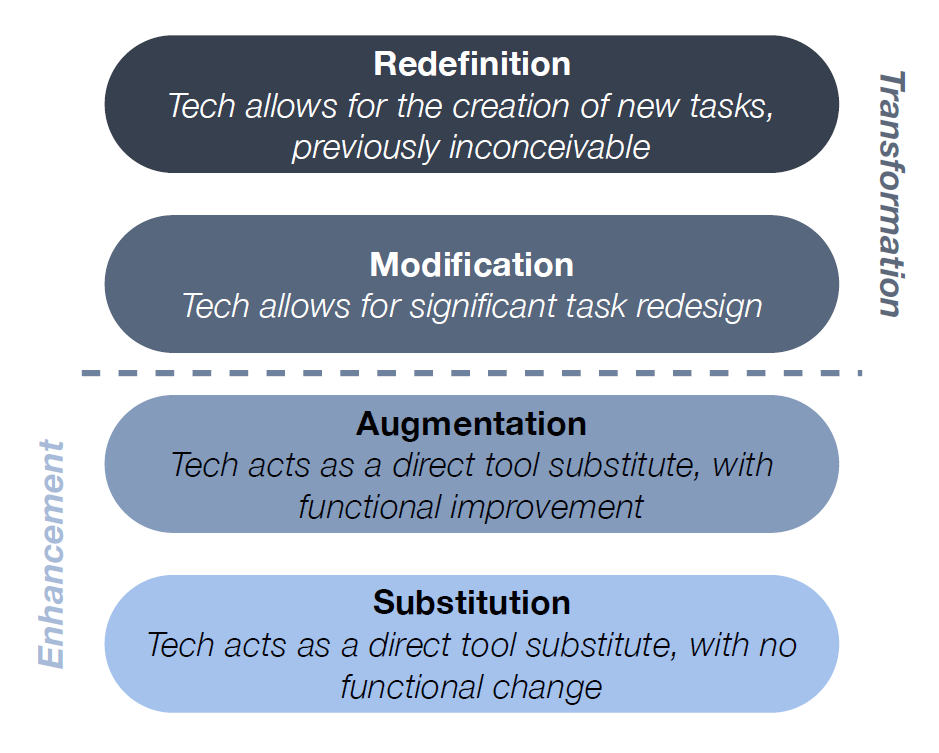
It was great to have the opportunity to hear Ruben Puentedura speak about his SAMR model (see right) as well as a new model of technology use that builds upon his older work. Further details of his talk can be found in his slides.

He explained the need for technology models by suggesting that just because individual teachers are making big technological changes, and improving their classes, it doesn’t mean there is institutional change as a coherent whole. When a teacher leaves, their work often leaves with them. That’s because what individual teachers do is not necessarily integrated with the work of other teachers or with the institution as a whole.

He also spent some time differentiating portable from mobile technology. Portable technology, he observed, can be used at Point A, closed down, transported to Point B, then opened up again there. Mobile technology, on the other hand, can be used at Point A and Point B and everywhere in between, without stopping.  A student is therefore not confined to learning in the domain of school OR the domain of home.  Now learning can take place truly continuously if we design appropriate experiences, and indeed, we need to construct learning experiences for students that leverage this. In other words, we need to construct a continuum of learning spaces that the students inhabit all day long.

Puentedura went on to explain that with the SAMR model, you get progressively improved student outcomes as you go up the levels.  He gave the example of a traditional task where students read a book and write an essay about it, and showed how technology could be added at the four levels of the framework:

  • Substitution: an e-book is used instead of a paper book, with no change in the task or how it is accomplished. This may have benefits: it may be more convenient (e.g., because of the inbuilt dictionary function), may save money on textbooks, and may improve students’ health because they don’t have to carry piles of heavy books around. However, none of these impact student outcomes.
  • Augmentation: students are asked to export their e-book annotations to an integrated text file, which gives them a coherent overview of their notes, which they can then build essays on. At this level there are small but noticeable improvements in student outcomes, perhaps by a fraction of a grade.
  • Modification: the heart of the task remains the same but a social component is introduced to both the (individual) reading and (individual) essay writing tasks. Students can be asked to share their integrated notes files. When they have access to other students’ ideas, they begin to think differently about the text, by seeing the trace of their classmates’ thoughts. In terms of formative assessment, students learn more about how to analyse their own thinking. Then, instead of handing in essays to the teacher, students can be asked to post their essays on a blog and engage in discussion on others’ essays and, as they respond to each other’s comments, they can modify and improve their own essays. Here, there can be significant changes in student outcomes – up to a full letter grade.
  • Redefinition: the heart of the task is changed, for example by varying the mode of response. Students could respond not with an essay, but with, say, a digital video. Students can use the sequencing of images, video, build in sound, etc. It’s not about just adding a new task, but replacing the original task with another. There can also be a true edit and comment cycle. Students could share their videos online, and harvest a broader set of feedback. This anticipated public response will drive them to perform at a higher level. At this level, there can be dramatic improvements in student outcomes – up to two letter grades. Struggling students can become average; average students can achieve highly.

The SAMR model also gives teachers a guide to how they can progress through the different levels.  Teachers can start at the lower levels, where they become comfortable with use of technology while not detracting from their work.  Over 2.5 to 3 years, teachers can progress to the highest level of the SAMR model.

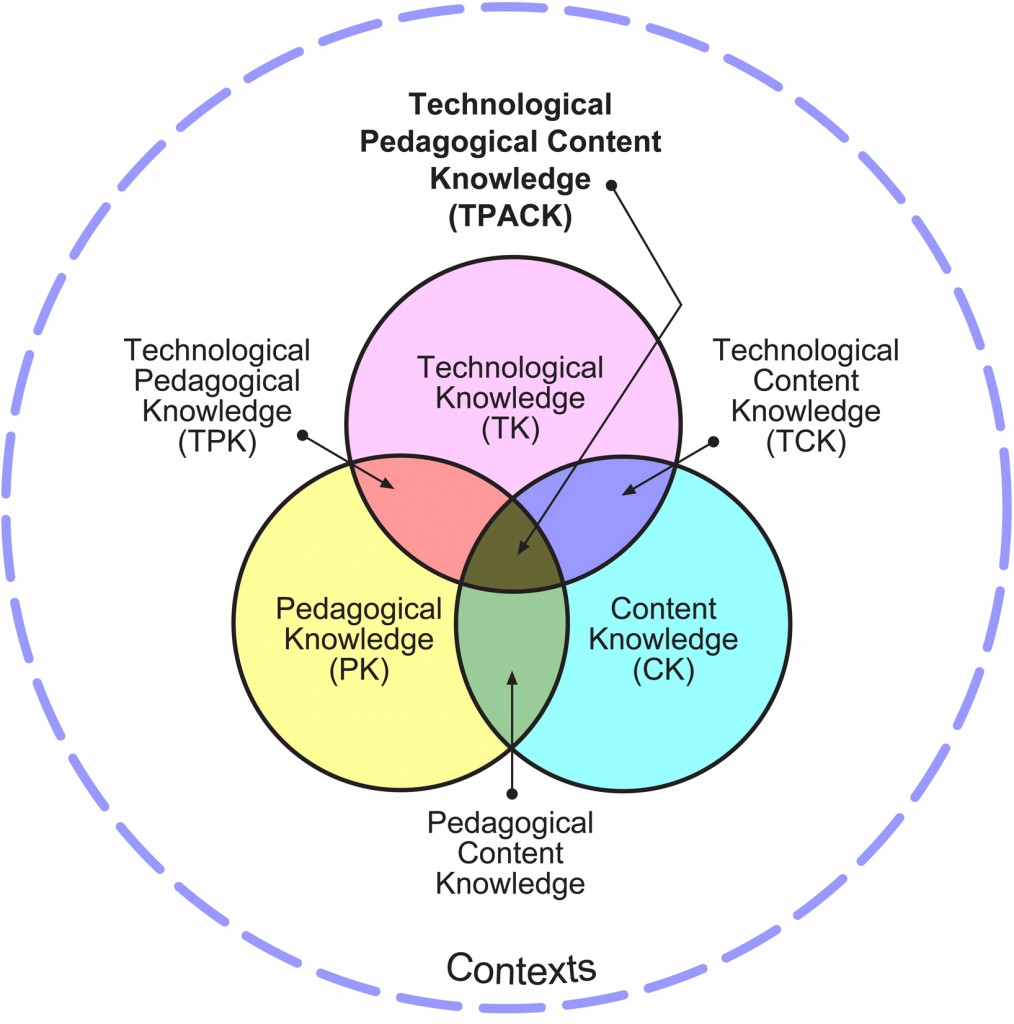
In a brief discussion of Mishra and Koehler’s TPACK model, Puentedura pointed out that the problem with teachers starting by thinking about pedagogy and content before they think about technology is that they can lock themselves into old approaches. In the TPACK model, technology is not accidental or incidental, but a peer with pedagogy and content. According to Puentedura, Mishra and Koehler’s view is that the most effective teachers consider all three knowledge areas together, but this is difficult to do. Puentedura himself suggests that it may be almost as effective to start with content, then shift quickly to pedagogy, then shift to technology. In other words, teachers can cycle through the three knowledge areas rather than actually thinking about all of them at once. This gives good results, often  indistinguishable from those achieved by teachers who do consider all three knowledge areas at the same time.


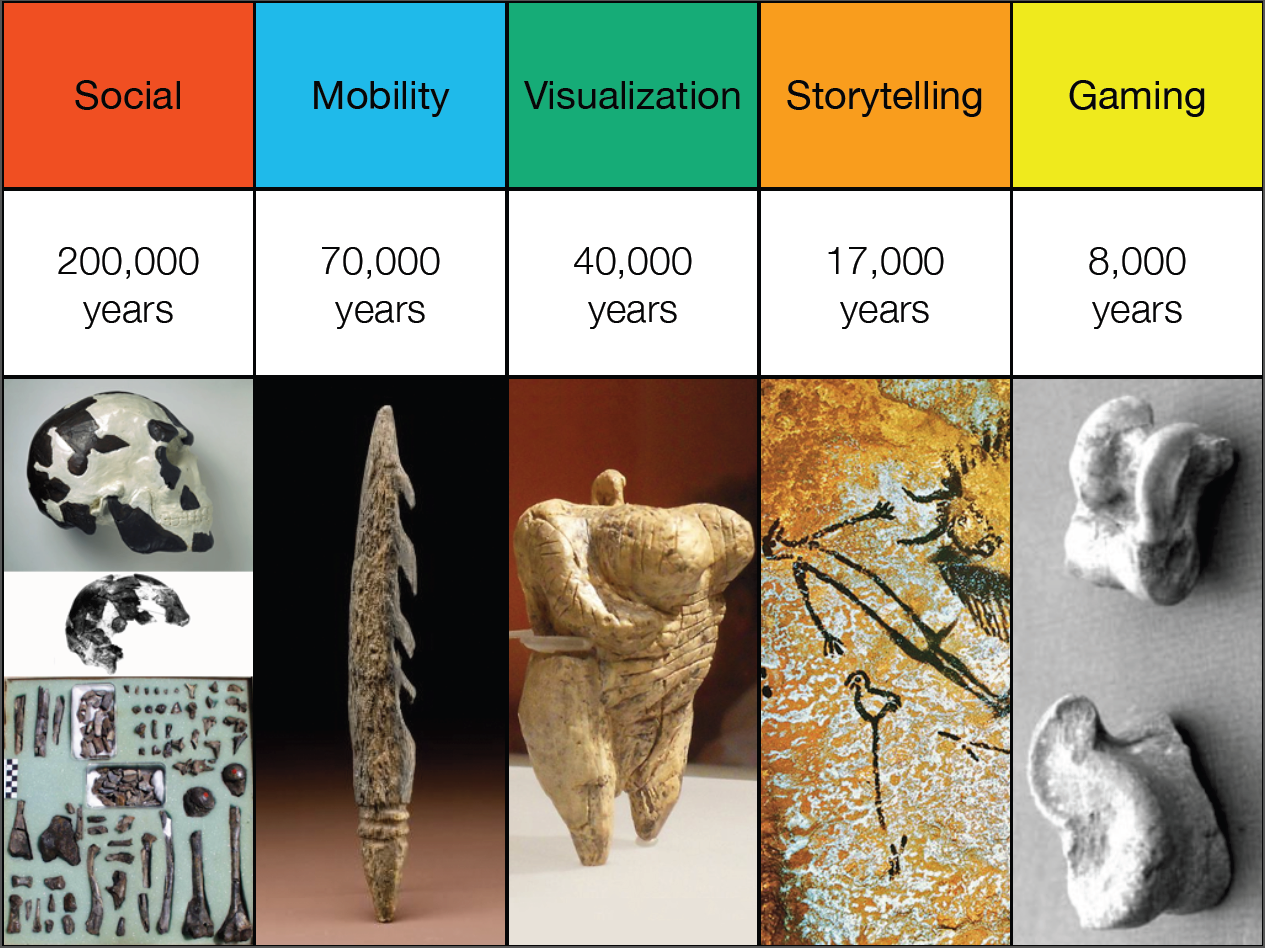
He then introduced a third model, finalised this year, which is entitled The First 200,000 Years of Educational Technology (see above). This model flags up different categories of technologies, rather than having teachers just reach into a grab bag of technologies. The five categories were determined by an analysis of the technologies included in the annual Horizon Reports.

Puentedura concluded by showing Mishra and Koehler’s model of 21st century learning, where they have pulled together the common elements from many different accounts of 21st century skills, and organised them into three macrocategories, as follows:

Foundational knowledge

  • Core content knowledge
  • Cross-disciplinary knowledge/synthesis
  • Information literacy

Meta knowledge

  • Creativity and innovation
  • Problem solving and critical thinking
  • Communication & collaboration

Humanistic knowledge

  • Life & job skills
  • Ethical & emotional awareness
  • Cultural competence

Finally, he commented that using national educational standards – no matter what country they come from – as the sole guide will not take teachers to the top of the SAMR ladder. He suggested that such standards should be seen as a floor, not a ceiling, and pointed the audience to the Guide: P21 Common Core Toolkit: A Guide to Aligning the Common Core Standards with the Framework for 21st Century Skills.

The kinds of models presented by Puentedura are certainly useful in scaffolding educators’ thinking about how best to incorporate new technologies into education. The conversation, I suspect, is far from over, but all of these models have an important role in informing and supporting our discussions.

Facebook is invading education!

M.Ed. ‘E-learning’ Course
Hong Kong
24-29 April, 
2012


Facebook is making serious inroads into education! I’ve taught a lot of Master’s level courses on e-learning in Australia, Hong Kong and Singapore, and over the last few years there have usually been one or two students in each cohort who’ve chosen to use Facebook as the main platform for the educational resource(s) they’re asked to create. But my recent Hong Kong course, which ran in April this year, is the first time I’ve seen nearly half the projects use Facebook as their main teaching & learning platform. A few years back, e-learning was dominated by blogs and wikis, but Facebook is becoming more and more dominant educationally with every passing year.

Interestingly, a conversation I started on this subject on Facebook itself garnered a lot of comments from educators about how they’d noticed the same thing. Some people asked whether this is a good thing or not. I’d say there are plusses and minuses: a Facebook page or group can function well as a mini-VLE or LMS, with all the advantages and limitations that VLEs and LMSs have. But what is clear is that our students are already in this space, and so are increasing numbers of educators. We need to be thinking about what this means for education.

New tech in Australian teacher training

Final ‘Teaching Teachers for the Future’ Meeting
UTS, Sydney
15-16 March, 2012

The final TTF meeting wrapped up a couple of years of Federally funded work in Australia, involving all 39 universities with pre-service teacher education programmes. Part of the Australian Digital Education Revolution, its main focus was on the teacher training needed to ensure new technologies are effectively embedded in classrooms across the country.

Its 3 main components were:

1) developing graduate standards for new teachers (led by AITSL)
2) creating a base of online resources and learning objects for teachers (led by ESA)
3) conducting research and evaluation, and establishing a national network of ICT expertise

AITSL opened the main part of the proceedings by showing a video created about the national standards, simply entitled The National Professional Standards for Teachers, and giving an overview of their National Professional Standards for Teachers website (Component 1 of TTF). ESA followed up with an account of the professional learning and curriculum resources they have been developing, which will shortly be made available to all teachers (Component 2 of TTF).

The keynote speakers, Punya Mishra and Matt Koehler, delivered a talk called T’PACK’d and Ready to Go! Back in 1999, said Koehler, the dominant view was of new technologies just as tools, which could be taught to teachers in workshops, but this didn’t necessarily mean they had much idea of how to apply the tools in the classroom. Mishra and Koehler worked with Shulman’s 1986 notion that there is a need for both content and pedagogical knowledge and, in 2004, published their initial TPCK model (represented as a triangle) and in 2005 modified it (changing it into the familiar circle format). It came to wider attention in 2006 but the acronym was unpronounceable, so they added the vowel to create TPACK, which was announced in 2007. The current model, drawn from Matt Koehler’s TPACK website, is shown below.

Koehler went on to say that a framework has to be complex enough to capture the perspectives of multiple stakeholders but not so complex that people can’t talk about it. The TPACK framework, however, is not meant to be prescriptive, nor is it meant to be complete (that is, it doesn’t cover everything a teacher needs to know). While it has been referred to in more than 300 scholarly articles, and appears in textbooks, the Australian TTF project is the biggest implementation of it to date.

Mishra pointed out that there is no such thing as an educational technology – most technologies are not in fact designed for education. As users, we are always redesigning technologies. “Only repurposing makes a technology an educational technology.” Repurposing is a creative and innovative act, with the crucial mediating role played by the teacher. These tools can allow us to break out of the box; we need to move from using technology to integrating technology to innovating with technology.

Koehler then returned to stress the importance of more work being done on measuring TPACK. To date, most work in this area has been in maths and science, but the TPACK model is meant to be broader than this.

Mishra rounded off the presentation by speaking of the  importance of (in)Disciplined learning, where we think creatively across disciplines and areas. They have recently published a piece in this area called “7 trans-disciplinary habits of mind (for the 21st century)”, and their work is reflected on a website called deep-play.com. Standard solutions don’t work, he suggested: creativity is the only solution. It is time, he concluded, to explore, create and share. Putting your ideas out there, ideally under a Creative Commons licence, will bring great returns.

Glenn Finger kicked off the first afternoon by reporting on the Research and Evaluation Working Group’s major findings (Component 3 of TTF). There were three main research and evaluation strategies:

  • the TPACK online surveys, which revealed measurable growth over the duration of the project in pre-service teachers’ confidence to use ICTs as teachers, and their confidence to facilitate student use of ICTs
  • the Most Significant Change Methodology, which resulted in 41 stories of implementation being submitted from participating institutions, in turn revealing four categories of engagement with ICTs, namely investigation; application; integration; and extension and leadership
  • facilitation of institution-led research projects and collaborations, with the upcoming Australian Computers in Education Conference, to be held in Perth in 2012, having a dedicated TTF strand
In their keynote on the second day, Punya Mishra and Matt Koehler gathered audience feedback about the future of TTF, covering areas such as scalability, sustainability, project research, developing TPACK, developing leaders, and advocacy. Mishra wrapped up by discussing what 21st century learning looks like, and listed three key ideas derived from their investigation of the literature on this subject:
  • KNOW: foundational knowledge remains important
  • ACT: metaknowledge (problem solving, critical thinking, collaboration, etc) is important
  • VALUE: humanistic knowledge (life & job skills, cultural competence, etc) is important

We must avoid technological determinism and see technology as embedded in social relations. Ultimately, Mishra suggested, meaning making is a transactional process – between the innovation and social structures and relationships. We need, therefore, to keep an eye on the bigger picture of technology – and of the TTF project.

Following the final keynote, the Minister for School Education, Peter Garrett, attended a series of short presentations on the accomplishments of the TTF project and responded with some comments of his own on the importance of embedding digital technologies in education.

Skip to toolbar